
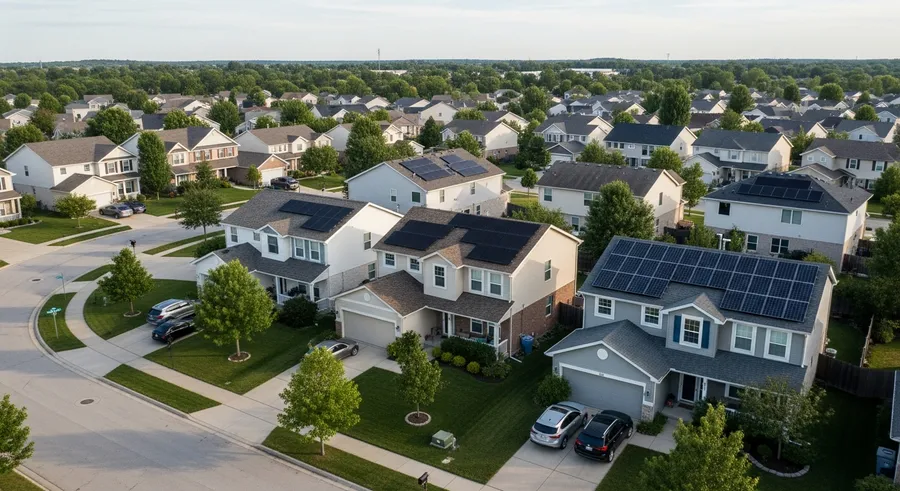
A solar loan is not just a monthly payment attached to a roof project. It is consumer credit. The application can trigger a hard credit inquiry, the financing can affect debt-to-income ratios, and the lender may file a UCC-1 financing statement against the solar equipment. None of those facts automatically make a loan bad. They do make the loan a document that should be read before the panel layout becomes the focus.
The Consumer Financial Protection Bureau's August 2024 issue spotlight on solar financing documented several patterns in the solar lending market, including dealer fees, confusing loan terms, and lien-related title friction. Those patterns still matter in 2026 because the expired Section 25D homeowner credit leaves less room for expensive financing to hide inside the payback math.
Prequalification versus hard credit pull
Many solar sales flows begin with a soft prequalification. A soft inquiry can estimate approval likelihood or rate range without the same credit-score impact as a hard inquiry. The formal loan application is different. Once the consumer authorizes the actual credit application, the lender may perform a hard pull with the credit bureaus.
A hard inquiry is usually not catastrophic, but it is real. It can affect the score temporarily and can matter more for a homeowner who is also shopping for a mortgage refinance, HELOC, car loan, or home purchase. The application screen should say whether the next step is a soft inquiry or a hard inquiry.
The UCC-1 lien is usually on equipment, not the house
Solar lenders commonly secure the loan with a UCC-1 financing statement. In the clean version, the filing covers the solar equipment, not the real estate. That distinction matters. A lien on the equipment gives the lender a security interest in the panels, inverter, and related system assets. It is not supposed to be the same as a mortgage lien on the property.
The CFPB spotlight noted that UCC filings can still create title friction because some title companies, buyers, or local recording practices treat the filing as something that must be addressed before closing. At home sale, the filing may need to be terminated, subordinated, transferred, or explained before the transaction closes. That is manageable when the documents are clean. It is painful when the homeowner discovers the filing only after a buyer's title review.
The loan agreement should identify the collateral. If the language appears to secure more than the solar equipment, or if the filing looks like a real-property lien, that is a reason to slow down and get clarification in writing.
Debt-to-income impact
A solar loan payment can affect future mortgage underwriting because it is a recurring debt obligation. Mortgage lenders evaluate debt-to-income ratio, commonly shortened to DTI. A $180 monthly solar loan payment may be lower than the avoided utility bill, but underwriters may still count the payment as debt when reviewing a refinance or new mortgage application.
That does not mean solar loans block refinancing. It means timing matters. A homeowner planning to refinance within the next six to twelve months should ask the mortgage lender how a new solar loan would be treated. The answer may depend on whether the solar loan appears on the credit report, whether the payment is fixed, whether the system is owned or leased, and how the utility savings are documented.
Lender of record versus servicer of record
The company collecting the monthly payment may not be the company that owns the loan. The lender of record is the entity that originated or owns the credit obligation. The servicer of record is the entity that sends statements, collects payments, processes autopay, handles payoff quotes, and reports payment history.
This distinction matters when there is a dispute. A homeowner may sign through an installer portal, receive statements from a servicer, and later learn that the loan has been sold to another owner. The payment obligation normally continues after a loan sale. The servicing address, online portal, payoff process, and credit-reporting entity may change.
The loan documents should state whether the lender may sell or assign the loan. That is common in consumer finance. The practical issue is recordkeeping: keep the original note, truth-in-lending disclosures, UCC filing information, installer contract, PTO records, and every notice of transfer.
Recourse and non-recourse language
Solar loan contracts can vary in how they describe remedies after default. A recourse loan generally allows the lender to pursue the borrower personally for unpaid amounts, subject to applicable law and contract terms. A non-recourse structure limits recovery to specified collateral. Most consumer solar loans should be read as personal debt unless the documents clearly say otherwise.
The distinction matters at home sale and in hardship scenarios. If the solar equipment value is lower than the loan balance, equipment repossession is not the same as loan forgiveness unless the contract says so. A homeowner should not assume that removing panels resolves the debt.
Dealer fees and the credit decision
The CFPB documented dealer fees that can increase the financed price above the cash price. In practical terms, the credit application may approve a loan that is larger than the system's cash price because the lender program cost is built into principal. That can raise the monthly payment, total repayment, and DTI impact.
The fastest check is to ask for the cash price and financed price for the same system. If the financed principal is materially higher, the difference should be identified before the application moves forward. A low advertised APR does not make the loan cheap if the principal was inflated to buy down the rate.
Bottom line
A solar loan application can involve a hard credit pull, a secured equipment filing, a recurring payment that affects DTI, and a lender or servicer that may change over time. The manageable version is transparent: cash price, financed price, collateral, inquiry type, payment terms, assignment rights, and payoff process are visible before signing. The risky version hides those details behind a monthly payment and a production promise.