
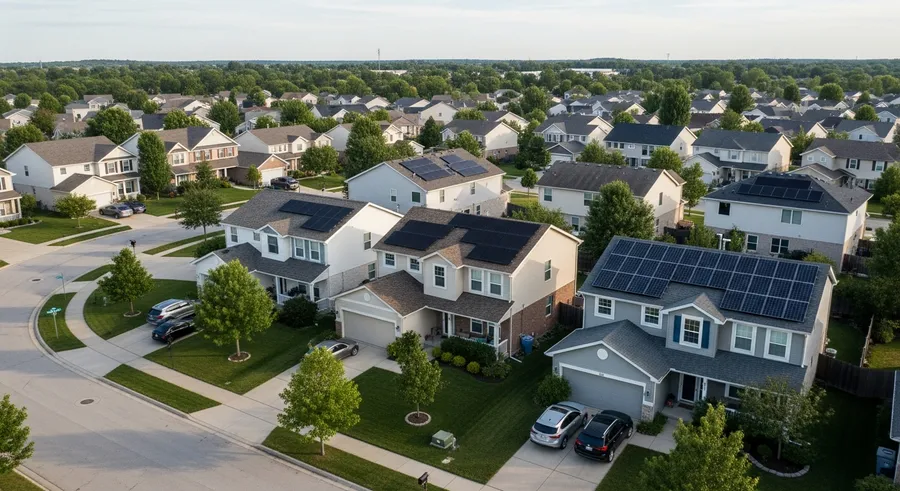
A residential solar installation typically adds meaningful assessed value to a home: the equipment, the labor, the interconnection upgrades, and (in some jurisdictions) the long-term electricity cost reduction can all show up in market-value-based assessment. Most states apply some form of property-tax exemption to residential solar to prevent the assessment increase from offsetting the system's electricity savings, but the structures and durability of those exemptions differ.
Understanding the property-tax treatment in a specific state is part of the 2026 payback diagnostic. A 20-year payback projection that assumes a property-tax exemption survives the entire ownership period is making an assumption that should be verified against current statute, not against installer marketing material.
Why property tax matters for solar
A residential property-tax bill is typically calculated as the assessed value multiplied by the local mill rate, with various exemptions applied. When a homeowner adds a solar electric system, the system itself has installed value (the gross install cost), and many jurisdictions historically would have added that value to the property assessment. The resulting incremental property-tax burden, if applied at standard rates, could substantially offset the system's annual electricity savings.
To prevent this, most states with significant residential solar markets have adopted property-tax exemptions or favorable assessment rules. The details vary widely. Some states grant a true exemption (the solar system is excluded from assessment entirely). Others use "least value" methods or freeze the assessment at pre-improvement value. Still others tie the exemption to a sunset date or to specific equipment types.
The Summit four-state landscape
Each of the four states Summit Energy Solutions covers (Illinois, Wisconsin, Colorado, Oregon) handles residential solar property tax differently. The differences are material to multi-year payback math.
Oregon: ORS 307.175 and the July 1, 2029 sunset
Oregon offers a state property-tax exemption for qualifying renewable energy property under ORS 307.175. The statute excludes the assessed value of solar electric generation facilities from property-tax calculation for the homeowner, on properties where the system meets the qualifying criteria. As of the most recent verification cycle, the exemption applies for tax years beginning before July 1, 2029.
The exemption sunsets for tax years beginning after July 1, 2029. Systems installed after that date will not qualify under the current statute, absent legislative extension. This is not a marketing tactic. It is a hard date written into Oregon law.
For a homeowner considering a 2026 install, ORS 307.175 applies for the full ownership period of typical residential solar (25 to 30 years from install date, well past the sunset). The question is what the statute looks like after 2029 for new installs at that point. The Oregon legislature could renew, modify, or let the exemption expire. Any installer projection that assumes the exemption survives for new 2030 or 2032 installs is making an unverified claim.
For systems already installed before July 1, 2029, the durability of the exemption beyond the sunset depends on the specific transition language the legislature uses if they revise the statute. Conservative payback projections for current installs should price in the exemption only through 2029 as a hard floor, with anything beyond that treated as bonus.
Colorado: state statute exemption with no known sunset
Colorado residential solar electric generation facilities are generally exempt from property-tax assessment under state statute. The exemption applies to qualifying renewable energy systems installed on residential or agricultural property, with specific provisions in Colorado Revised Statutes Title 39 (Property Tax). Unlike Oregon's ORS 307.175, the Colorado exemption is not under a known sunset clause as of the most recent verification cycle.
Specific qualifying criteria, system size limits, and any local-jurisdiction variation should be verified against current Colorado Department of Local Affairs guidance before treating the exemption as a fixed input. Some Colorado counties apply additional administrative requirements (an exemption application form or annual reporting) that should be confirmed with the county assessor's office.
For homeowners on cooperative utilities (CORE Electric and others), the property-tax treatment is the same as for Xcel customers; the exemption is state-statute based, not utility-tariff based. Whether the homeowner is served by an investor-owned utility, a cooperative, or a municipal utility does not change the property-tax treatment.
Illinois: special assessment for renewable energy improvements
Illinois applies a special assessment method for residential renewable energy improvements rather than a true exemption. Under Illinois property-tax statutes, the assessor values the property using a "least value" method that compares pre-improvement value with post-improvement value, and applies the lower of the two to the renewable-energy portion of the property. The practical effect is that the solar installation typically does not add to the property-tax bill, even though it adds to the home's market value.
The specific mechanics differ by county and assessor practice. Some Illinois counties apply the special assessment automatically when an interconnection is recorded. Others require the homeowner to submit a renewable-energy improvement application before the next assessment cycle. The Illinois Department of Revenue publishes guidance on the special assessment, and individual county assessor offices are the authoritative source for local application procedures.
For Naperville and other municipal-utility customers, the property-tax treatment is the same as for ComEd or Ameren customers; the special assessment is state-statute based and does not vary by serving utility. Municipal property assessors handle the application the same way.
Wisconsin: state statute exemption for residential solar
Wisconsin exempts residential solar electric systems from property-tax assessment under state statute. Wis. Stat. § 70.111 includes provisions exempting certain renewable energy property, with residential solar electric generation among the qualifying categories. The exemption is not tied to a sunset date as of the most recent verification cycle.
Wisconsin's exemption operates similarly to Colorado's: the assessed value of the qualifying solar system is excluded from the property-tax calculation, and the homeowner pays property tax as if the system were not present. Specific qualifying criteria, system size thresholds, and local administrative requirements should be confirmed against current Wisconsin Department of Revenue guidance and the local county or municipal assessor before treating the exemption as a fixed input.
For We Energies customers in the Milwaukee metro and the I-94 corridor, this exemption is one of the offsets that helps preserve cash-payback math even given the avoided-cost net-metering treatment described in the Wisconsin net-metering deep dive.
What to verify before signing
Three property-tax cross-checks separate a clean residential solar quote from one that overstates ongoing-savings projections.
Confirm the state-level treatment matches what the installer claims. Quotes that describe property-tax handling as "permanent" or "lifetime" should be cross-checked against the state statute. In Oregon, "permanent" is wrong for installs after July 1, 2029. In Colorado, Wisconsin, and Illinois, the structures are durable as of current statute but should still be confirmed against current Department of Revenue guidance, since legislative changes are always possible.
Confirm the local administrative process. Some states' exemptions apply automatically when an interconnection is recorded; others require a homeowner application. Illinois county assessors vary in practice. Oregon and Colorado typically apply automatically but the local assessor's office is the authoritative source for any application requirement. Missing a required filing window can mean a missed year of exemption.
Confirm the time horizon in any payback projection. A 20-year ownership projection in Oregon should assume the exemption through 2029 as a hard floor and treat post-sunset value as conditional on legislative action. A 20-year projection in Colorado, Wisconsin, or Illinois can reasonably assume the current statute persists, with the caveat that any state legislature can revise its property-tax code in any session.
Bottom line
Residential solar property-tax treatment is favorable across the Summit Energy Solutions four-state footprint, but the structures differ in mechanism and durability. Oregon's ORS 307.175 sunset on July 1, 2029 is the most consequential timing input, particularly for installs after 2028 where the post-sunset treatment becomes a real input. Colorado, Wisconsin, and Illinois each apply state-level mechanisms without known sunsets, though local administrative practice varies enough that confirmation with the county or municipal assessor remains the right step before treating the exemption as locked in.
For 2026 installs, all four states' current property-tax structures apply. The state-specific walkthroughs at Illinois, Wisconsin, Colorado, and Oregon work the utility record and the worked example layered on top, with primary-source citations on the methodology page.